Overview of the Division of Student Life and Enrollment Logic Model
The Director of Strategy and Assessment provides leadership and expertise to staff to increase Division-wide understanding of the impact and influence of our policies, systems, and programs on the student experience. With a focus on justice, equity, diversity, and inclusion, the Director works to enhance the capacity of staff to translate assessment results into effective practice that supports student success.
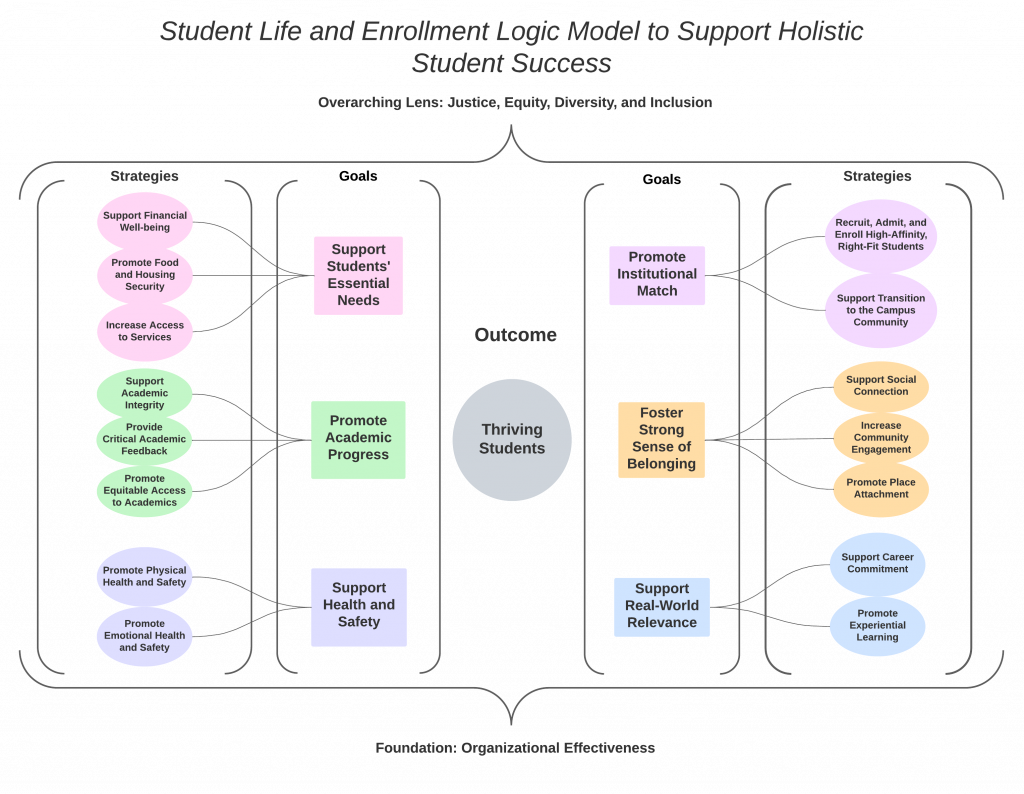
Supporting the Student Success Journey:
The Division of Student Life and Enrollment works to foster holistic success at every stage of the student lifecycle by supporting student-centered programs, systems, practices, and infrastructure in which everyone experiences a strong sense of belonging. Broadly defined, holistic student success refers to the ability of students to achieve academically, persist to graduation, and be prepared to become contributing members of their communities and careers long after graduation. With an overarching lens of justice, equity, diversity, and inclusion (JEDI), the Division works to foster holistic student success by supporting six core elements of the student experience:
Promote Institutional Match
Institutional Match refers to the alignment of students’ skills and needs and the University. A strong institutional match includes students feeling a sense of belonging and comfort during campus visits and interactions with their peers, faculty, and staff during the recruitment, application, and enrollment process. Further, students experience alignment between their academic goals and the academic programs offered on campus. Other indicators of a strong institutional match include financial aid packages that meet their needs, a campus culture that resonates with their values, opportunities for extracurricular involvement match their preferences, and the geographic location is suitable for their lifestyle.
Support Students’ Essential Needs
Essential Needs refers to the fundamental requirements of students to live and learn while enrolled at UConn including food, shelter, and financial stability. Supporting these needs enable students to focus on fully engaging in their classes, work experiences, and social activities.
Promote Academic Progress
Academic Progress refers to students’ advancement and development in their studies, including fulfilling course requirements, making timely progress towards completing their degree, and meeting academic standards set by the institution.
Support Health and Safety
Health and Safety encompasses the programs, procedures, and practices put in place to promote the well-being and safety of all Huskies. This includes maintaining safe facilities, providing health resources, promoting mental health, offering wellness programs, and adhering to regulations to create a secure and conducive learning and living environment for students, faculty, and staff.
Support Real-World Relevance
Real-World Relevance refers to the practical applicability and significance of academic knowledge, skills, and experiences in the context of their future careers and daily lives outside of UConn. It involves connecting classroom learning to real-life situations, ensuring that what students learn is meaningful, useful, and prepares them for the challenges and opportunities they’ll encounter in their professional and personal endeavors. This process allows students to commit fully to their academic and career path and gain practical experience in creativity, innovation, and entrepreneurship.
Foster Strong Sense of Belonging
Belonging refers to a sense of feeling accepted, valued, and supported within the community. This includes feeling positive connections to peers, faculty and staff, as well as with the physical campus. For college students, a sense of belonging is crucial for improved health and well-being, satisfaction with their college experience, and overall academic success.
Contributing to UConn’s Strategic Plan
UConn’s Strategic Plan identified 15 long-term key performance indicators (KPIs) that represent the values and strategic priorities for the institution. Three KPIs directly relate to areas of focus for the Division of Student Life & Enrollment. In support of the larger plan, each department within the Division identified the initiatives and strategies that contribute to achieving these goals. The Division will track and assess the progress related to the activities of this plan and share updates with the community. Below are the three KPIs from UConn’s Strategic Plan and the strategies identified to meet these goals.
Key Performance Indicators
Increase 6-year Graduation Rate
The six-year graduation rate is the percent of undergraduate students that complete their degree from their first institution of attendance within six years of starting their program. Six-year graduation rates are used nationally as one way to measure and compare student success across institutions. While UConn’s six-year graduation rate of 84% is significantly higher than the national average of 64%, we are committed to continually strengthening the student experience and graduation rate. To support this goal, the Division of Student Life & Enrollment will continue to work collaboratively across the institution to identify and support efforts that reduce the barriers to degree completion at every stage of the student lifecycle.
Decrease Financial Concern
On average, UConn Huskies graduate with less educational debt than their peers who attend other 4-year colleges and universities. However, the amount of educational debt poses financial burdens and challenges for many students and their families. In a recent survey of undergraduate students at UConn, 46% of students reported feeling some amount of concern about the loans and debt they are accruing. The Division of Student Life & Enrollment has identified several strategies to address these concerns. These strategies include continually working to maximize financial aid opportunities, support financial literacy, facilitate student employment, and increase access to affordable food and housing across all campuses.
Increase Students’ Sense of Value
In a recent survey, the vast majority of UConn Huskies (75%) reported that they felt valued as individuals on campus. We are proud of the work we do to foster welcoming communities for so many students. At the same time, we aim for every Husky to feel valued at each of our campuses. To work towards that goal, we will continue to expand our efforts to promote positive connections among students, faculty, and staff, to ensure our facilities are welcoming and accessible, and to promote community health and safety.